

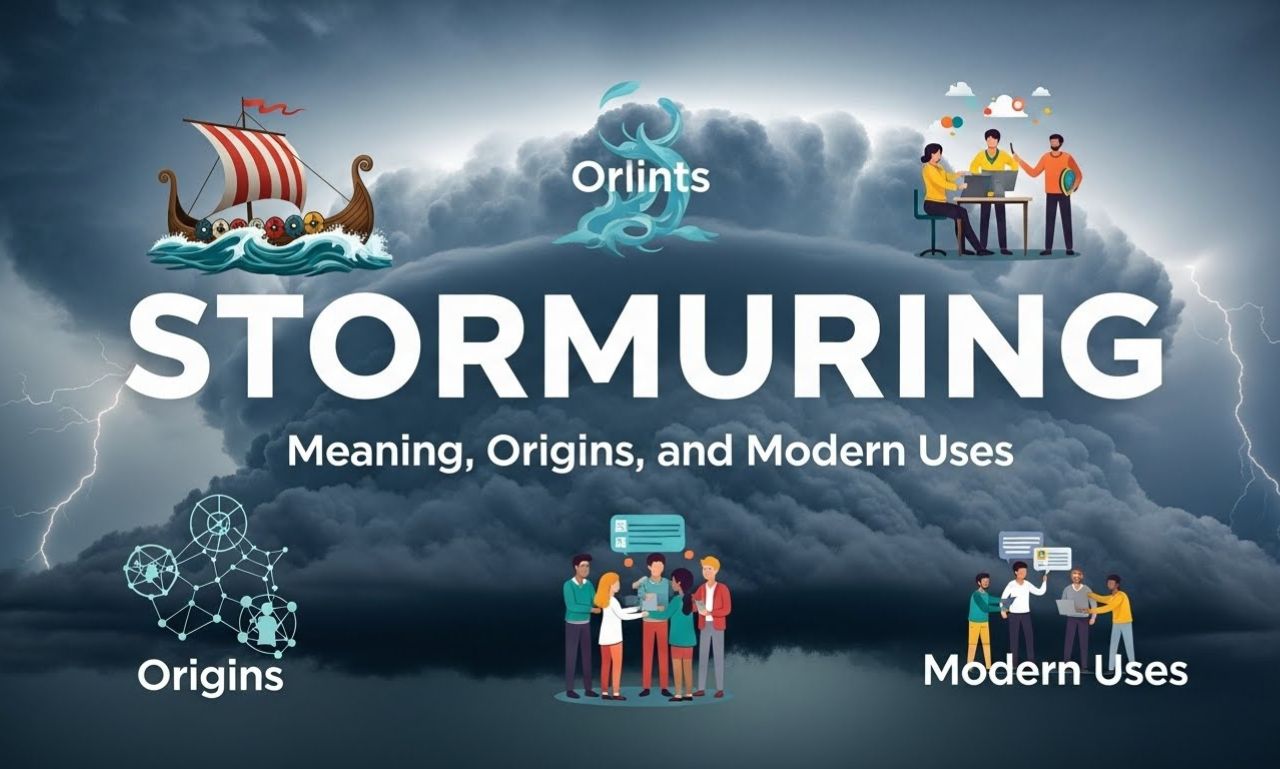
Stormuring is a term that has recently begun appearing across creative writing, online discussions, and conceptual frameworks related to emotion, leadership, and personal growth. While not yet formally defined in major dictionaries, stormur ing is increasingly used to describe a state of intense transformation driven by pressure, conflict, or emotional turbulence. Much like a storm reshapes the landscape it passes through, stormur ing represents the process of change that follows inner or outer disruption.
This article explores the meaning of stormur ing, its possible origins, symbolic interpretations, and how the concept is being applied in modern contexts.
What Is Stormuring?
At its core, stormuring refers to a phase where chaos, uncertainty, or emotional intensity leads to growth, clarity, or reinvention. It is often associated with:
-
Emotional upheaval followed by insight
-
Conflict that results in resolution
-
Personal or creative rebirth after difficulty
-
Leadership or team dynamics under pressure
Stormuring does not describe the storm itself, but rather the act of enduring, processing, and evolving through the storm.
Possible Origins of the Term
The word stormuring appears to be a hybrid construction, likely derived from:
-
“Storm” – symbolizing chaos, force, or emotional intensity
-
“-uring” – suggesting an ongoing process or state of becoming
This structure gives stormuring a dynamic quality, emphasizing movement, endurance, and transformation rather than a static condition.
Some writers link stormuring conceptually to ideas found in psychology, philosophy, and even Norse or Germanic linguistic patterns, though it remains a modern, informal term.
Stormuring as a Psychological Concept
In psychological and emotional contexts, stormur ing can describe periods of inner conflict that lead to self-awareness. Examples include:
-
Navigating grief or loss
-
Facing major life transitions
-
Overcoming self-doubt or fear
-
Experiencing burnout before renewal
Rather than viewing emotional storms as purely negative, stormuring reframes them as necessary phases for mental and emotional development.
Stormuring in Leadership and Team Dynamics
Stormuring is sometimes compared to the “storming” phase in team development models, where disagreement and tension arise before cohesion forms. In this context, stormuring represents:
-
Open confrontation of problems
-
Honest communication under pressure
-
Growth through disagreement
-
Stronger alignment after conflict
Leaders who understand stormur ing recognize that temporary instability can lead to long-term strength if handled constructively.
Creative and Artistic Interpretations
In literature, poetry, and art, stormur ing is often used metaphorically. Artists use the term to describe:
-
Creative blocks that lead to breakthroughs
-
Emotional intensity fueling expression
-
Destruction as a prelude to creation
-
Darkness giving meaning to light
Stormur ing has become a powerful word for capturing the beauty within struggle.
Stormuring in Personal Growth
From a self-improvement perspective, stormur ing encourages people to:
-
Accept discomfort as part of growth
-
Learn from hardship rather than resist it
-
Embrace change instead of fearing it
-
Trust the process of transformation
Rather than seeking constant calm, stormur ing promotes resilience and adaptability.
Why Stormuring Matters Today
In a world shaped by rapid change, uncertainty, and emotional pressure, stormur ing resonates strongly. It reflects modern realities such as:
-
Career instability
-
Digital overload
-
Identity exploration
-
Social and emotional challenges
The concept reminds us that growth rarely happens in comfort, and that storms—internal or external—often shape our strongest versions.
Common Misconceptions About Stormuring
Despite its positive undertone, stormur ing is sometimes misunderstood.
-
❌ Stormur ing means chaos with no purpose
✔ Stormuring implies meaningful transformation -
❌ Stormuring is permanent
✔ It is a temporary but powerful phase -
❌ Stormuring should be avoided
✔ Avoidance can delay growth
Understanding these distinctions helps people apply the idea more constructively.
Conclusion
Stormur ing is a compelling modern term that captures the process of becoming stronger through struggle. Whether applied to emotional growth, leadership challenges, creative expression, or personal reinvention, stormur ing highlights the value of resilience and transformation.
As the term continues to gain traction, stormur ing stands as a reminder that storms do not simply destroy—they also clear the path for renewal.