

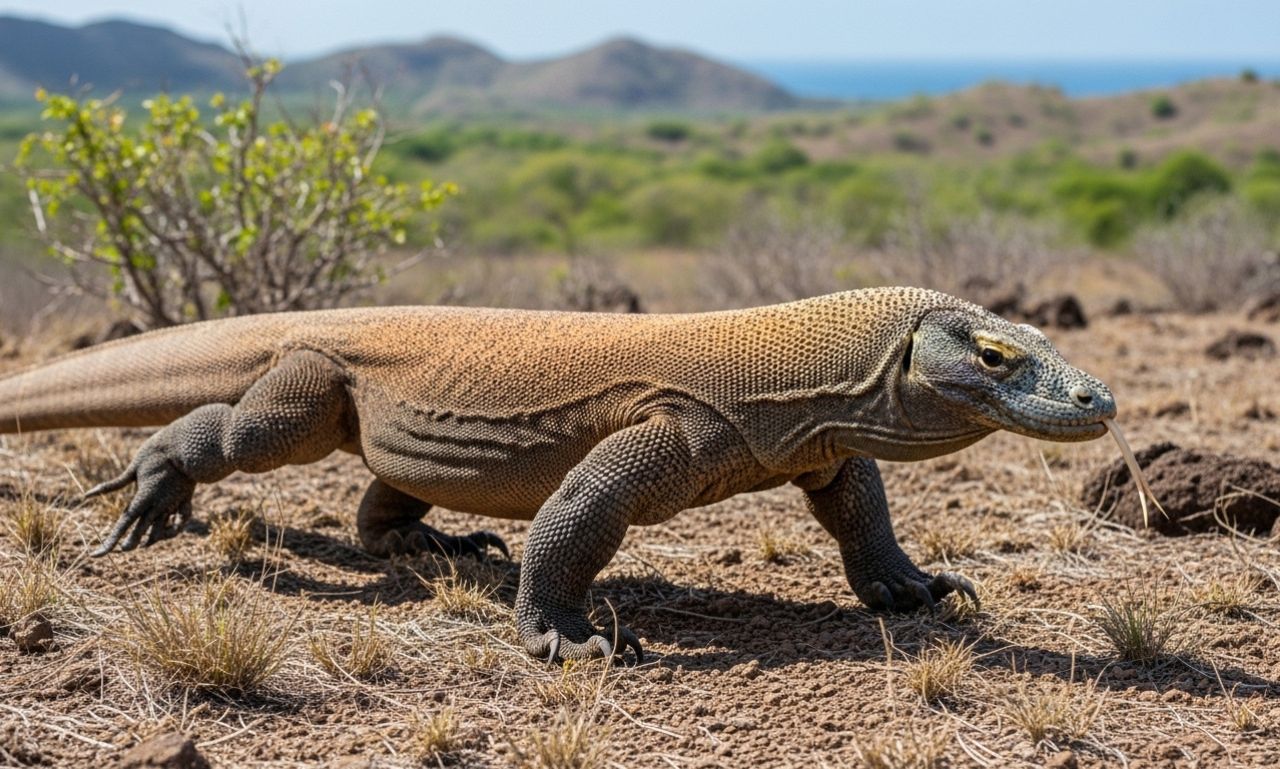
The Komodo dragon (Varanus komodoensis) is the largest living species of lizard in the world. Known for its massive size, powerful bite, and impressive hunting ability, the Komodo dragon is a fascinating reptile found mainly on a few Indonesian islands. This powerful predator has attracted the attention of scientists, wildlife enthusiasts, and tourists for decades.
Physical Characteristics
Komodo dragons are enormous reptiles that can grow up to 10 feet (3 meters) in length and weigh over 150 pounds (70 kilograms). Their bodies are covered in rough, armored scales, giving them strong protection against injuries.
Some notable features include:
-
Long muscular tail
-
Sharp curved claws
-
Powerful jaws with serrated teeth
-
Forked tongue used for sensing the environment
Their color ranges from gray to brown, helping them blend into their natural surroundings.
Habitat and Distribution
Komodo dragons live in a limited area of Indonesia, mainly on islands such as:
-
Komodo Island
-
Rinca Island
-
Flores Island
Many of these locations are protected within Komodo National Park, a UNESCO World Heritage Site created to conserve the species and its habitat.
Komodo dragons prefer tropical forests, savannas, and grasslands, where they can hunt and find shelter.
Diet and Hunting Behavior
Komodo dragons are carnivorous predators. They feed on a wide variety of animals, including:
-
Deer
-
Wild pigs
-
Birds
-
Smaller reptiles
-
Occasionally water buffalo
They are known for their ambush hunting strategy. A Komodo dragon often waits quietly for prey and then launches a sudden attack.
Their saliva contains harmful bacteria and venom-like toxins, which weaken the prey after a bite. Even if the prey escapes initially, it may die later from infection or blood loss.
Reproduction and Life Cycle of Komodo Dragon
Komodo dragons typically mate between May and August, and females lay about 15–30 eggs in nests during September.
The eggs incubate for about eight months before hatching. Young Komodo dragons are much smaller and more vulnerable to predators, including adult Komodo dragons. To survive, juveniles often live in trees until they grow large enough to defend themselves.
A Komodo dragon can live for around 30 years in the wild.
Ecological Importance on Komodo Dragon
As apex predators, Komodo dragons help maintain the balance of their ecosystem. By controlling populations of deer and other animals, they prevent overgrazing and support biodiversity in their habitats.
Their presence also attracts eco-tourism, which contributes to conservation funding and local economies.
Conservation Status
The Komodo dragon is considered endangered due to habitat loss, climate change, and human activities. Because the species exists in a limited geographic area, environmental changes could significantly affect its survival.
Organizations such as the World Wildlife Fund support conservation programs that aim to protect Komodo dragons and their natural habitats.
Efforts include:
-
Habitat protection
-
Wildlife monitoring
-
Tourism regulation
-
Community education programs
Conclusion on Komodo Dragon
The Komodo dragon is one of the most extraordinary reptiles on Earth. Its massive size, powerful hunting skills, and unique biology make it a remarkable example of evolution and adaptation. Protecting this species is essential not only for biodiversity but also for preserving one of nature’s most impressive predators.