

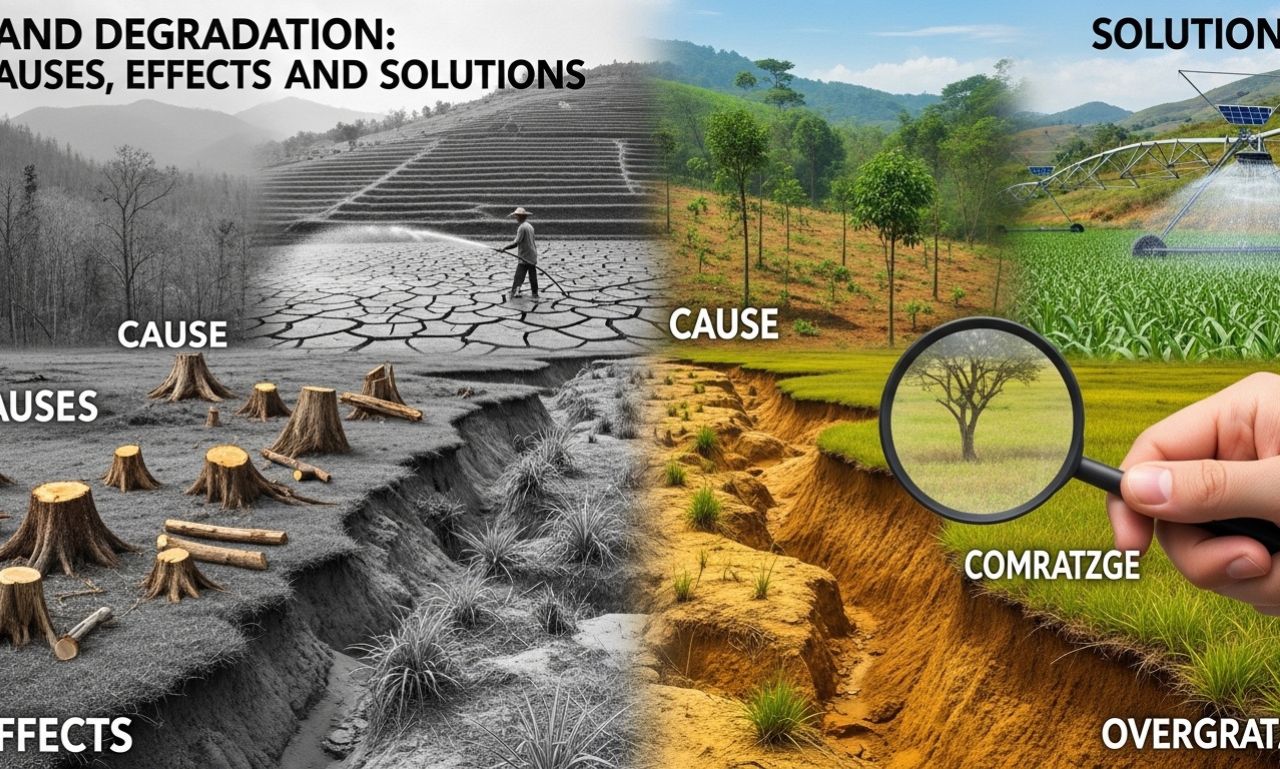
Land degradation is one of the most pressing environmental challenges facing the world today. It refers to the decline in the quality and productivity of land due to natural processes and human activities. Healthy land is essential for agriculture, biodiversity, and human survival. However, unsustainable land use, deforestation, pollution, and climate change have led to significant damage to land resources across the globe.
Understanding the causes, effects, and solutions of land degradation is important for protecting ecosystems and ensuring sustainable development.
What Is Land Degradation?
Land degradation is the deterioration of soil quality and land productivity. It occurs when the natural ability of land to support plants, animals, and human activities decreases over time. This process can be gradual or rapid depending on environmental conditions and human actions.
Organizations like the United Nations Convention to Combat Desertification emphasize that land degradation threatens food security, biodiversity, and economic stability worldwide.
Major Causes of Degradation
Several natural and human-induced factors contribute to land degradation.
1. Deforestation
Cutting down forests for agriculture, urban expansion, or industrial use removes vegetation that protects soil from erosion. Without tree roots to hold the soil together, land becomes vulnerable to degradation.
2. Overgrazing
Excessive grazing by livestock removes vegetation cover and compacts the soil. This reduces the soil’s ability to absorb water and nutrients.
3. Unsustainable Agricultural Practices
Intensive farming, excessive use of chemical fertilizers, and poor irrigation methods can damage soil structure and reduce fertility.
4. Soil Erosion
Wind and water erosion remove the top layer of soil, which contains essential nutrients needed for plant growth.
5. Climate Change
Extreme weather events such as droughts and floods, linked to Climate Change, accelerate land degradation and desertification.
6. Urbanization and Industrial Activities
Expanding cities and industrial pollution can contaminate soil and reduce its productivity.
Effects of Degradation
Land degradation has serious environmental, economic, and social consequences.
1. Reduced Agricultural Productivity
When soil fertility declines, crop yields decrease, affecting farmers and food supply.
2. Loss of Biodiversity
Degraded land cannot support diverse plant and animal species, leading to habitat loss.
3. Desertification
Severely degraded land can turn into desert-like conditions, especially in dry regions.
4. Increased Poverty
Communities that depend on agriculture and natural resources may face economic hardship due to declining land productivity.
5. Environmental Problems
Land degradation contributes to flooding, water scarcity, and increased greenhouse gas emissions.
Solutions
Addressing land degradation requires coordinated global and local efforts.
1. Sustainable Farming Practices
Techniques such as crop rotation, organic farming, and conservation agriculture help maintain soil fertility.
2. Reforestation and Afforestation
Planting trees helps restore soil health, prevent erosion, and improve biodiversity.
3. Soil Conservation Methods
Practices like terracing, contour plowing, and windbreaks can reduce soil erosion.
4. Responsible Water Management
Efficient irrigation systems and water conservation techniques prevent soil salinization and degradation.
5. Government Policies and Awareness
Environmental policies, education, and community participation play a crucial role in protecting land resources.
Global initiatives led by organizations like the Food and Agriculture Organization support sustainable land management and restoration programs.
Conclusion
Land degradation is a serious environmental issue that threatens food security, ecosystems, and human well-being. The main causes include deforestation, overgrazing, unsustainable farming, and climate change. Its effects range from reduced crop yields to biodiversity loss and desertification.
However, through sustainable land management, reforestation, improved agricultural practices, and global cooperation, it is possible to restore degraded land and protect this vital resource for future generations.