

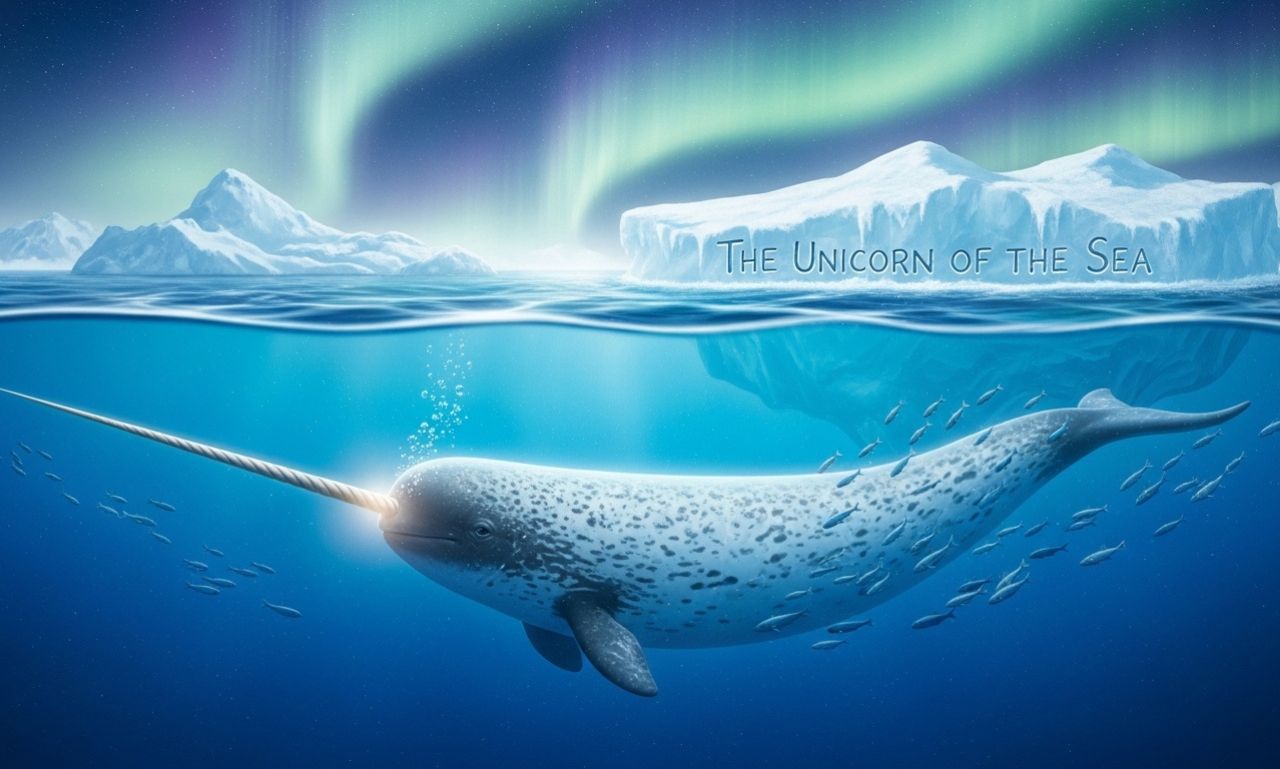
The Narwhal is one of the most mysterious and fascinating marine mammals in the world. Often called the “unicorn of the sea,” the narwhal is famous for its long spiral tusk that extends from its head. This unique whale lives in the icy waters of the Arctic and has captured human imagination for centuries.
Narwhals play an important role in Arctic ecosystems and are closely connected to the cultures of northern communities.
What Is a Narwhal?
The nar whal is a medium-sized toothed whale belonging to the family Monodontidae, which also includes the Beluga Whale.
The narwhal’s most distinctive feature is its long spiral tusk, which is actually an extended canine tooth. This tusk can grow up to 3 meters (10 feet) long and is usually found in males, although some females may also have one.
Physical Characteristics
Narwhals have several unique features that help them survive in the harsh Arctic environment.
Key characteristics include:
-
Speckled gray and white skin
-
A rounded head with no dorsal fin
-
A long spiral tusk in males
-
Streamlined body adapted for cold water
Adult narwhals typically grow to 4–5 meters (13–16 feet) in length and can weigh up to 1,600 kilograms.
Habitat and Distribution
Narwhals live in the Arctic Ocean and surrounding seas. They are commonly found in waters near:
-
Greenland
-
Canada
-
Russia
These whales prefer deep Arctic waters covered with sea ice. They migrate seasonally between offshore winter habitats and coastal summer areas.
Diet and Hunting
Narwhals are carnivorous and feed on various marine animals. Their diet includes:
-
Fish such as Arctic cod
-
Squid
-
Shrimp
They use echolocation to locate prey in dark Arctic waters. Narwhals can dive extremely deep, sometimes reaching depths of over 1,500 meters (4,900 feet) in search of food.
The Purpose of the narwhal
For many years, scientists debated the purpose of the narwhal’s tusk. Research suggests several possible functions:
-
Detecting environmental changes through sensory nerves
-
Displaying dominance or attracting mates
-
Social interactions with other narwhals
Sometimes narwhals are observed “tusking,” where they gently rub tusks together with other whales.
Behavior and Social Structure
Narwhals are social animals that often travel in groups called pods. These pods may contain:
-
A few individuals
-
Dozens of whales during migration
They communicate using clicks, whistles, and other underwater sounds.
Threats to Narwhals
Although narwhals are not currently considered critically endangered, they face several threats:
-
Climate change affecting sea ice habitats
-
Industrial activity and shipping in the Arctic
-
Noise pollution interfering with echolocation
-
Limited hunting by Arctic communities
Changes in the Arctic environment could significantly impact narw hal populations in the future.
Cultural Importance
Narwhals have been important to Arctic Indigenous communities for centuries. Their meat, skin, and tusks have traditionally been used for food, tools, and cultural practices.
In medieval Europe, narwhal tusks were once believed to be real unicorn horns and were sold as rare magical objects.
Conservation Efforts of narwhal
Organizations such as the World Wide Fund for Nature support research and conservation programs to monitor narw hal populations and protect Arctic ecosystems.
Protecting narwhals also helps safeguard the fragile Arctic environment.
Conclusion on narwhal
The narw hal is one of the ocean’s most unique and mysterious creatures. With its legendary tusk and life in the icy Arctic waters, it continues to fascinate scientists and wildlife enthusiasts around the world. As climate change transforms the Arctic, protecting narw hals and their habitats will remain an important challenge for global conservation efforts.