

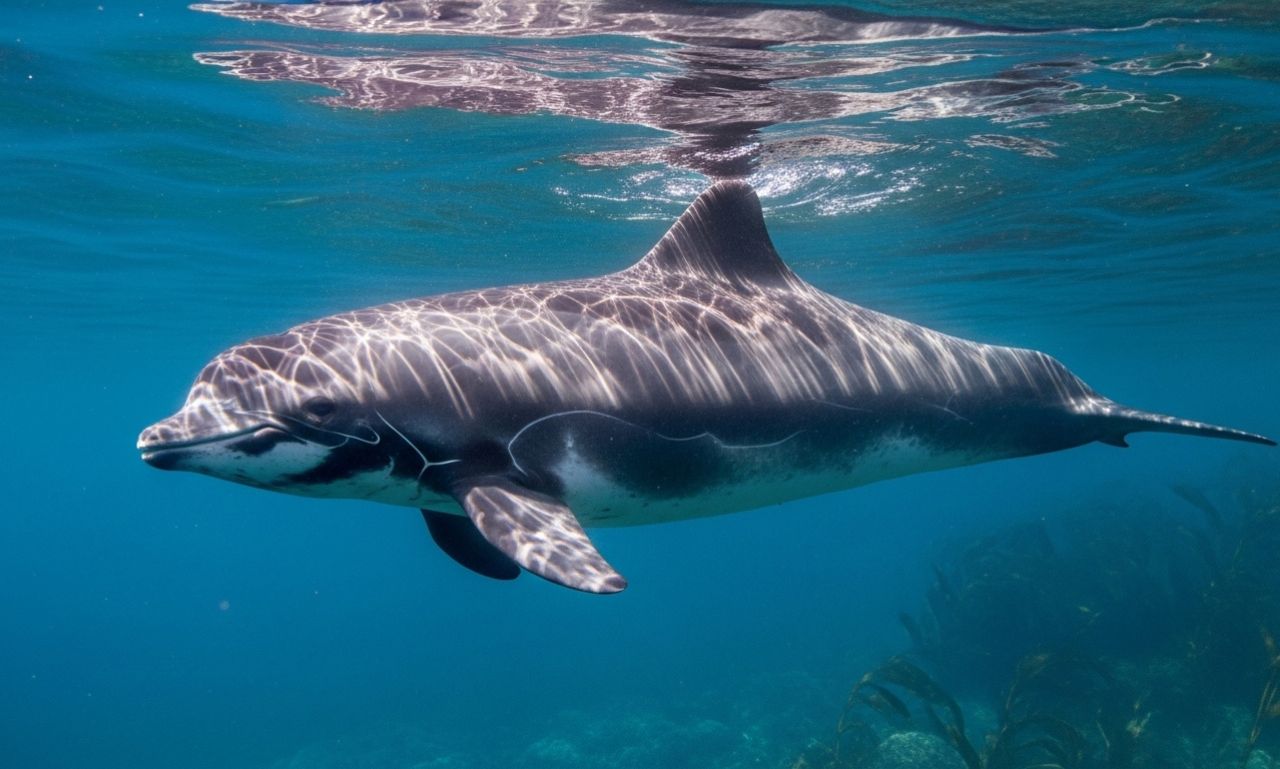
The vaquita (Phocoena sinus) is the rarest marine mammal on Earth and one of the most endangered animals in the world. This small porpoise lives only in a tiny region of the northern Gulf of California in Mexico. Because of its extremely limited habitat and human activities in the area, the vaquita is now on the brink of extinction.
Discovered by scientists in 1958, the vaquita remained largely unknown for decades due to its shy nature and remote habitat. Today, it has become a powerful symbol of global wildlife conservation efforts.
Physical Characteristics
The vaquita is the smallest member of the porpoise family, making it unique among marine mammals.
Key physical features include:
-
Length: about 1.2–1.5 meters (4–5 feet)
-
Weight: 30–55 kg (66–121 pounds)
-
Dark rings around the eyes
-
Dark patches on the lips giving a “smiling” appearance
-
Small, compact body
Their coloration is typically light gray on the back and pale gray or white on the belly, helping them blend into ocean waters.
Habitat and Range
Vaquitas live in only one place on Earth: the upper Gulf of California, also known as the Sea of Cortez, in Mexico.
Their habitat is characterized by:
-
Shallow coastal waters
-
Depths of less than 50 meters
-
Turbid (murky) water
-
Strong tidal currents
Because their range is so small, any environmental changes or fishing activities in this area can have a major impact on their survival.
Diet and Feeding Behavior
Vaquitas are carnivorous marine mammals that feed on small sea creatures.
Their diet mainly includes:
-
Small fish
-
Squid
-
Crustaceans such as shrimp
Like other porpoises, vaquitas use echolocation to locate prey. They produce high-frequency clicks and interpret the echoes to detect fish in dark or murky waters.
Behavior and Lifestyle
Vaquitas are very shy and elusive, which makes them difficult for researchers to observe.
Typical behaviors include:
-
Swimming alone or in small groups of 2–3 individuals
-
Surfacing quietly with minimal splashing
-
Avoiding boats and human activity
Because they rarely leap or create large splashes, they are often hard to spot in the wild.
Reproduction and Life Cycle
Vaquitas reproduce slowly, which makes population recovery challenging.
Reproductive facts:
-
Females usually give birth once every two years
-
Gestation lasts about 10–11 months
-
Only one calf is born at a time
-
Lifespan is estimated at around 20 years
This slow reproduction rate means the population cannot quickly recover from declines.
Major Threats
The biggest threat to vaquitas is accidental entanglement in fishing nets, especially gillnets.
Gillnet Fishing of Vaquita
Gillnets are large fishing nets used to catch fish and shrimp. Unfortunately, vaquitas can become trapped in these nets and drown because they cannot reach the surface to breathe.
A major problem is illegal fishing for the totoaba fish, whose swim bladder is highly valuable in black markets.
Other threats include:
-
Illegal fishing
-
Habitat disturbance
-
Limited genetic diversity due to small population size
Current Population Status
The vaquita population has declined dramatically over the past few decades.
-
In the 1990s, there were around 600 vaquitas
-
By 2018, fewer than 20 individuals remained
-
Today, scientists estimate around 10 or fewer vaquitas may still survive
Because of this, the vaquita is classified as Critically Endangered by the International Union for Conservation of Nature (IUCN).
Conservation Efforts of Vaquita
Governments, scientists, and conservation organizations are working urgently to save the vaquita.
Key efforts include:
-
Banning gillnet fishing in vaquita habitats
-
Increasing patrols to stop illegal fishing
-
Promoting vaquita-safe fishing gear
-
Raising global awareness about the species
Despite these efforts, protecting the vaquita remains extremely difficult.
Why the Vaquita Matters
The vaquita is an important part of the Gulf of California ecosystem. As a predator of fish and squid, it helps maintain balance in the marine food web.
More importantly, the vaquita represents the global challenge of protecting endangered wildlife from human impact.
Saving the vaquita would show that international cooperation and conservation action can still protect species from extinction.
Conclusion on Vaquita
The vaquita is a rare and remarkable marine mammal found only in the Gulf of California. With its small size, distinctive eye markings, and secretive behavior, it is one of the most unique porpoises on Earth. However, its extremely small population means urgent conservation action is needed. Protecting the vaquita may be one of the last chances humanity has to prevent the extinction of this extraordinary